
A year after Ye launched YZY Money its promised card still appears unavailable, YZY is down 90%
One year after Ye pitched YZY Money as a new system built on crypto, the token remains tradable but much of the broader product is difficult to find in working form.

A year after American rapper Kanye West, also known as Ye, launched YZY Money as a crypto financial system for his Yeezy ecosystem, its flagship token is down 90% from its peak while one of its most ambitious products, the YZY Card, still appears nowhere to be seen.
- YZY Money arrived on Aug. 20, 2025, with considerably bigger ambitions than issuing another celebrity memecoin.
- Ye, formerly known as Kanye West, presented the project as a "new economy, built on chain," centered on three products: the Solana-based YZY token, a merchant processor called Ye Pay and a YZY Card intended to let holders spend crypto globally.
One year later, the token is still trading. The rest of the financial ecosystem, though, is considerably harder to account for.
The card that was supposed to take YZY everywhere
At launch, the YZY Card was pitched as a non-custodial debit card that would allow users to spend YZY and the USDC stablecoin at millions of merchants worldwide, without manually converting their crypto into traditional currency. Prospective customers were directed to a waitlist.
The card remains described on YZY Money's official website today, where it is called "a tool for spending YZY and USDC globally."
The card hasn't disappeared from YZY Money's pitch, so it would be too strong to call it formally canceled.
But a year after users were first invited to join a waitlist, there is still little indication that consumers can actually get one.
Ye Pay made it further
Ye Pay, the payments product announced alongside the card, had a more tangible existence.
It was pitched as a processor that would let online merchants accept both credit cards and crypto. Contemporary descriptions said Ye Pay aimed to undercut the roughly 3.5% fees associated with traditional payment platforms.
Roughly six months before YZY Money launched, Shopify stopped powering payments for Yeezy's apparel site.
Shopify said in February 2025 that the store had violated its terms and wasn't engaging in what it considered authentic commerce practices.
When YZY Money launched in August, Yeezy.com already accepted cards and USDC on Solana, while payments using YZY itself were labeled "coming soon."
- The project later introduced YZY Wallet, which it promoted as a way to buy, sell and spend YZY and USDC.
- In one of its later public updates, YZY Money said the wallet had added sponsored gas so users could transact without paying transaction fees themselves.
There are signs that functionality did eventually reach Yeezy customers. Users reported depositing USDC into YZY Wallet and attempting to pay for products through Yeezy.com, although several subsequently complained that transactions or withdrawals failed.
By late July, users were reporting that YZY Wallet and the YZY/USDC payment options had disappeared from Yeezy.com. The current Yeezy checkout supports Visa, Mastercard, Amex and Discover, while its FAQ lists credit and debit cards, Apple Pay, Google Pay and several regional payment services.
Neither page currently lists YZY or USDC.
From $3 billion frenzy to a $0.30 token
What unquestionably launched was YZY itself. The token triggered an extraordinary burst of speculation.
- Within roughly 40 minutes, contemporary market data put YZY's valuation at around $3 billion before it rapidly reversed.
- Some reports described that figure as market capitalization while others referred to fully diluted valuation, reflecting differing early estimates of how much supply was actually circulating.
Trading activity was similarly extreme. YZY generated hundreds of millions of dollars in volume during its first day, with some trackers putting 24-hour turnover above $700 million. By the following day, the token had already fallen more than 65% from its high.
One year later, the market looks radically different.
- YZY currently trades around $0.3, compared with CoinGecko's $2.9 all-time high, leaving it about 90% below its peak.
- Its circulating market capitalization is roughly $87.7 million, while 24-hour trading volume has fallen to about $110,000.
- The token's fully diluted valuation is about $293 million, which is more than three times its current market capitalization.
Ye got 70% of the supply
YZY has a maximum supply of 1 billion tokens. Its launch tokenomics, branded "YZYNOMICS," allocated 20% to public supply and 10% to liquidity, leaving the remaining 70%, or 700 million YZY, for Yeezy Investments, an entity tied to Ye's Yeezy business.
That 70% wasn't supposed to become liquid immediately. It was split into three staggered allocations:
- 30% of total supply with a three-month cliff followed by 24 months of vesting;
- 20% with a six-month cliff followed by 24 months of vesting;
- another 20% with a 12-month cliff followed by 24 months of vesting.
The project uses Jupiter Lock, an on-chain vesting system, and publishes links to the individual vesting tranches.
That means the first Yeezy Investments tranche passed its cliff in late 2025, the second in early 2026, and the final 20% allocation has now reached its 12-month cliff around YZY's first anniversary. The underlying 24-month vesting schedules continue.
A financial system still described as a "concept"
Perhaps the clearest snapshot of where YZY Money stands a year later is its own website.
The site remains online and continues to offer links for trading YZY. It also continues to describe Ye Pay and YZY Card. But its definition of the broader project has changed little from launch: "YZY Money is a concept for a new financial system, built on crypto rails."
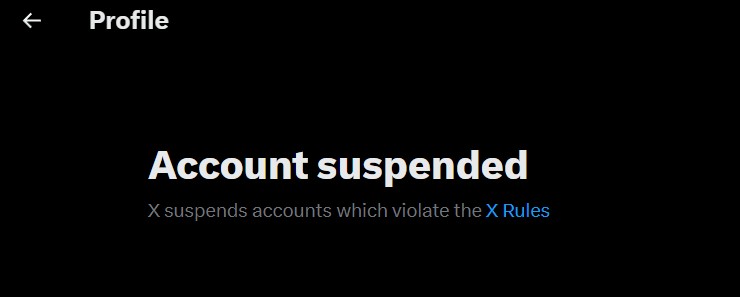
YZY Money's X account. Source: X
Meanwhile, the project's official X account, @YZY_MNY, is currently suspended. X doesn't publicly specify the reason for the suspension.
Yeezy's main commerce site is still operating, though its current storefront does not visibly promote YZY Money, Ye Pay or the YZY Card.
None of that establishes that Ye Pay or the card has been formally abandoned. YZY Money has made no public announcement shutting them down, and its dedicated website remains online.
Discuss this article:


Community Notes
Explain what is inaccurate or missing and cite original, reliable sources. Your browser creates a private signing key so one persistent contributor—not cookies—builds a track record.
Rate independently. Live totals are hidden while consensus forms, and one network can contribute only one eligible rating to a note.
One year after Ye pitched YZY Money as a new system built on crypto, the token remains tradable but much of the broader product is difficult to find in working form.