



On-chain lending markets tied heavily to real-world assets are holding billions of dollars in deposits.
And yet, borrowing is still running well below the amount of capital available, according to a September report from market research firm Float Research.
In a Friday article on X, the firm revealed that total deposits across RWA-focused lending markets stood at roughly $7.3 billion, while outstanding loans were about $2.5 billion.
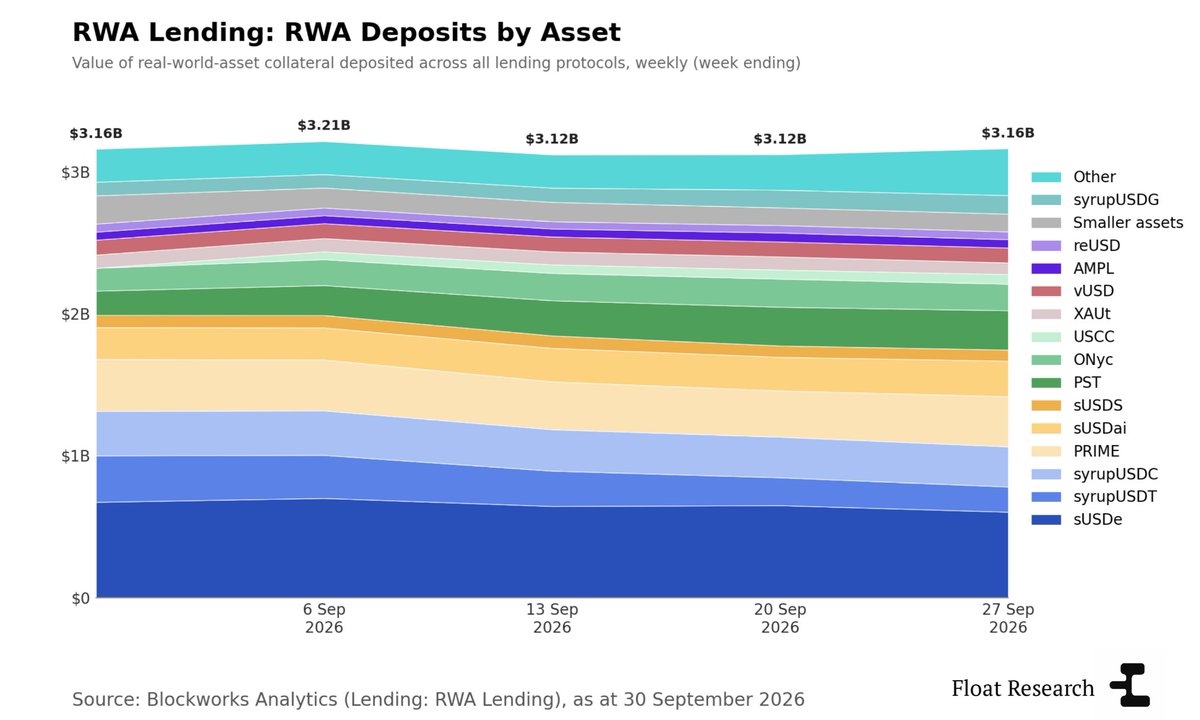
RWA deposits by asset. Source: Float Research
That works out to roughly 34% loan-to-deposit utilization, which the report said suggests "meaningful borrowing capacity remains."
- Float Research said the figures were based on third-party data from RWA.xyz and Blockworks, with some totals derived from its own calculations.
The money is already there
RWA lending usually involves crypto-native lending protocols accepting tokenized credit products, yield-bearing assets and other real-world-linked tokens as collateral.
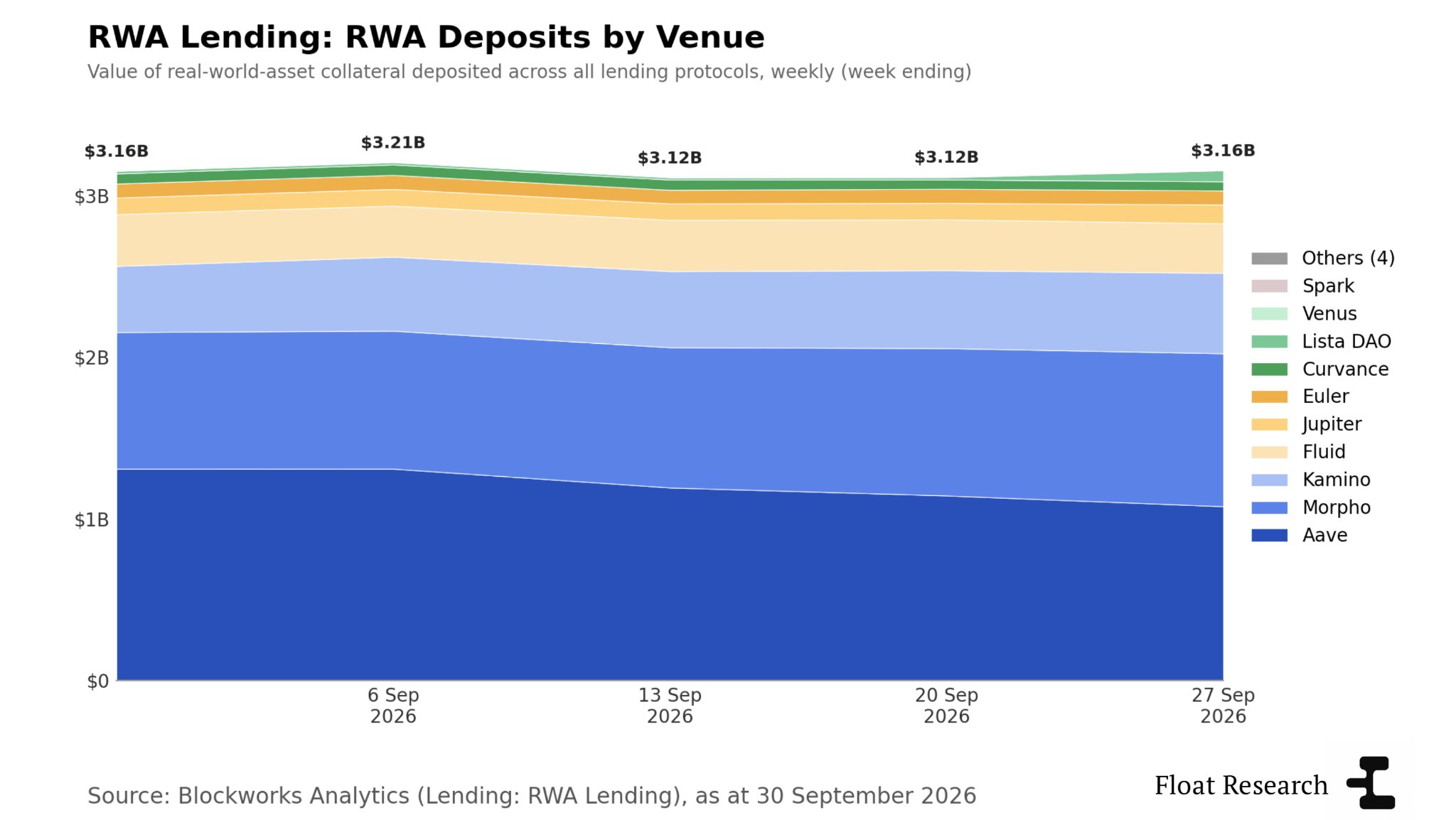
RWA deposits be venue. Source: Float Research
Float Research estimated that around $3.1 billion in tokenized RWA collateral was posted across these markets in September.
- The biggest chunk, according to the report, came from yield-bearing stablecoin wrappers, led by Ethena's sUSDe, while private-credit and credit-linked products also made up a large share.
- Gold was a much smaller part of the mix.
Aave, Morpho, Kamino and Fluid together accounted for roughly 86% of deposits, according to the report.
Morpho alone held about 30%, up from roughly 27% in previous months.
Borrowing has room to grow
Speaking to The Coinformer, Float Research spokesperson Seth (@SethRWAs on X) said the gap mostly comes down to the fact that "putting money in is easy and borrowing is hard."
Stablecoin holders can put money into curated lending vaults and earn yields of around 6%. But borrowing remains available against a much narrower set of approved RWA tokens, the spokesperson said.
Borrowers are also still concentrated among a relatively small group of traders and institutions, meaning deposits have been able to grow faster than loans.
Seth added that one of the clearest ways that could change would be for more trading venues and lending markets to accept tokenized assets as collateral or margin.
Large institutional credit deals could also make a meaningful difference. A major asset manager using tokenized fund shares to borrow stablecoins, for example, would add real borrowing demand.
"We haven't seen either at scale yet," the spokesperson said.
The bigger risk may be money leaving
The bigger near-term risk for RWAs may not be borrowers defaulting, but depositors pulling capital out, Seth told The Coinformer.
Much of the supply comes from a relatively small number of large stablecoin allocators. If they withdraw, total deposits could fall quickly and utilization could rise even if borrowing itself stays flat.
The spokesperson pointed to Sept. 30, when some vaults saw withdrawals around the time of a security scare involving MetaMask, even though the vaults themselves didn't appear to have been affected.
That episode, Seth pointed out, offered a small example of how quickly the supply side of the market can move.