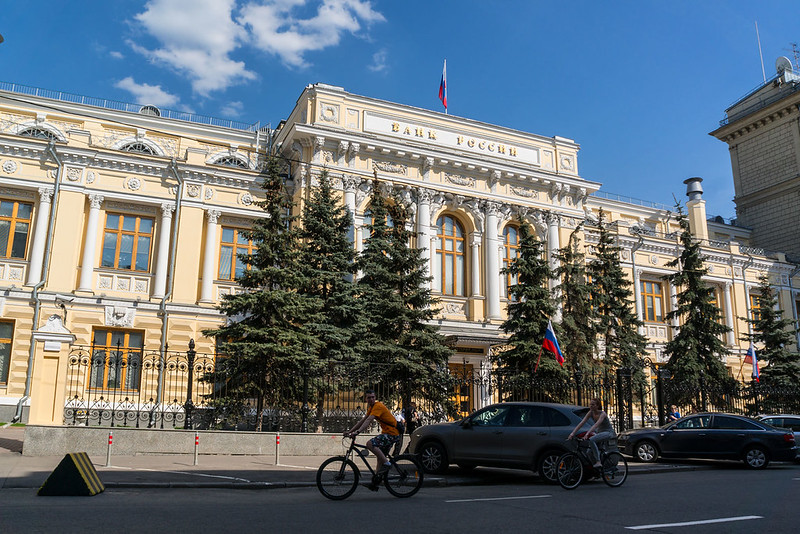


Russian banks may get a hard 1% capital cap on their own crypto exposure, with the Bank of Russia saying the rule should assume tokens can get blocked or create losses for lenders.
Alexander Danilov, head of the Bank of Russia's banking regulation and analytics department, told Interfax, the Russian state news agency, that the central bank plans to cap banks' crypto exposure at 1% of a banking group's capital once it gets the legal power to introduce the rule.
- The new rule would apply to a bank's own crypto position, not every crypto held for clients.
Danilov argued banks would have to treat their own crypto bets as a direct hit to capital. So if a bank puts money into crypto, Russia's central bank wants it to have enough capital set aside in case that crypto becomes worthless (e.g. frozen by an issuer).
Alexander Danilov
Danilov explained that the rule follows Basel standards, which cap banks' higher-risk crypto exposure at 1% of Tier 1 capital.
Alexander Danilov
Client crypto is treated differently
The Bank of Russia had earlier considered counting client crypto positions inside the same 1% cap if a bank acted as a custodian.
But that part has changed as Danilov said the draft law now says a bank isn't responsible for client positions because it can't control that market risk.
So client crypto won't be included in the 1% exposure limit.
The central bank still wants to apply an operational-risk charge to client crypto holdings, covering risks such as hacks and loss of assets under custody.
Danilov said the regulator plans to apply a 50% risk weight to the full amount of client crypto positions. He said that means a bank should be ready for potential losses of about 5% of a client's crypto position if it has to compensate clients.
Long or short, the bigger number counts
The Bank of Russia also wants to avoid letting banks offset crypto risks too easily. As Danilov explained, the regulator will count the bigger side of a bank's crypto position, whether long or short.
- A long position means the bank owns crypto, while a short one means the bank owes crypto to someone else.
The reason is freeze risk. If a bank's own crypto assets get blocked while it still owes crypto to a counterparty, the two sides may not cancel each other out.