
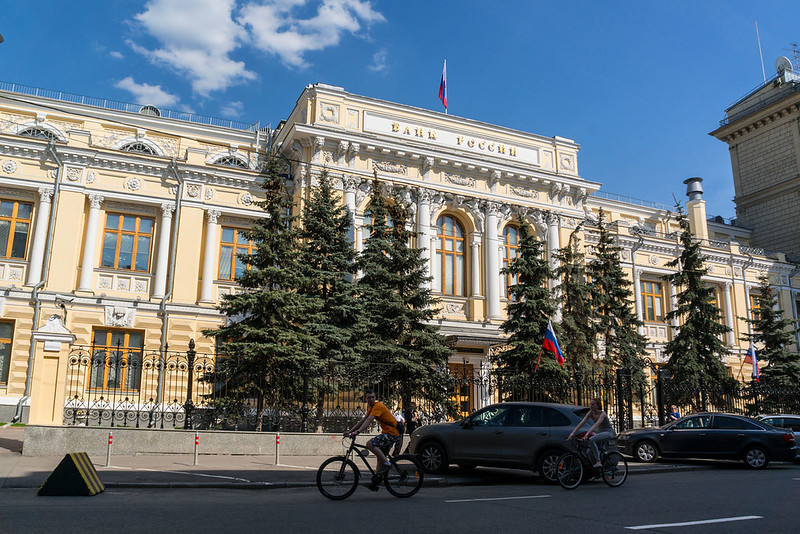


The Bank of Russia omitted Circle's USDC stablecoin from a proposed retail crypto whitelist less than two months after a deputy finance minister said the stablecoin would be included.
The central bank's draft directive, published on Tuesday, Aug. 11, and reviewed by The Coinformer, names Bitcoin (BTC), Ethereum (ETH) and Tether's USDT as the three cryptocurrencies that Russian exchanges may admit to public organized trading.
- Circle's USDC, for some reason, doesn't appear in the list.
- The central bank also gave no explanation for its omission.
That differs from what Deputy Finance Minister Ivan Chebeskov said in a June 16 interview.
Asked which crypto assets would be legalized, Chebeskov said the government had proposed a list for non-qualified investors based on market capitalization.
He identified Bitcoin, Ethereum, USDT and USDC as the assets that would be available first.
USDC's omission doesn't establish that it failed the test
Under Russia's new crypto law, the Bank of Russia may include an asset when its average market capitalization over the preceding two calendar years exceeds 5 trillion rubles (about $60.5 billion) and its average daily trading volume exceeds 1 trillion rubles (about $12.1 billion).
The asset must also have at least five years of closing-price data from a licensed foreign exchange meeting a separate trading-volume requirement.
The explanatory note accompanying the draft says Bitcoin, Ethereum and USDT satisfy those conditions.
It doesn't state whether USDC failed one of them or was excluded for another reason.
Meeting the thresholds doesn't guarantee inclusion, though. The law says the central bank "may" add qualifying currencies, leaving the final choice to the regulator.
The proposed list also doesn't amount to a complete prohibition on USDC. Qualified investors may trade cryptocurrencies outside the list on organized markets, while the whitelist determines which assets may be offered through public trading to non-qualified investors.
Russia chooses USDT despite previous asset freeze
The draft gives no indication that the issuers' sanctions policies influenced the selection.
Both Tether and Circle can blacklist addresses. Tether froze more than 2.5 billion rubles (about $28 million at the time) of USDT connected to sanctioned Russian exchange Garantex in March 2025, forcing the platform to suspend operations.
The incident prompted a Russian Finance Ministry official to call for domestic alternatives to foreign stablecoins. Nevertheless, USDT is the only stablecoin included in the central bank's proposed public trading list.
The proposal remains subject to public consultation through Aug. 24. If adopted, it would take effect 10 days after its official publication.