


Liberland, a self-declared crypto micronation whose prime minister is TRON founder Justin Sun, is facing fresh internal criticism over a voting system that can give its wealthiest participants hundreds of times more political power than ordinary citizens.
- The criticism centers on Liberland Merit, or just LLM, a crypto token that the would-be country uses to determine political influence.
- But unlike conventional elections, where each eligible voter gets one vote, Liberland says its congressional elections operate on a "one-Merit-one-vote" system.
- Citizens with more staked Merits therefore carry more voting power.
- That system is now drawing scrutiny from inside Liberland itself.
In an Aug. 24 discussion on Liberland's official community forum, several participants questioned how much political power has accumulated in the hands of senior figures.
One community member, Adrien Raymond Roger Villessaud, said Liberland President Vít Jedlička holds more than 3 million Merits, which would give him the voting power of more than 600 citizens holding the minimum 5,000 Merits required for full political rights.
Liberland requires citizens to stake at least 5,000 Merits (worth about $10,000 at Liberland's stated $2-per-Merit rate) to exercise full political rights.
- At 3 million Merits, worth roughly $6 million at that same rate, one holder would have 600 times the minimum voting weight.
Villessaud also claimed that Liberland elections rarely attract more than roughly 70 actual voters, potentially making large Merit holders even more influential.
That participation figure couldn't be independently verified from Liberland's published election results.
A crypto country with Justin Sun as prime minister
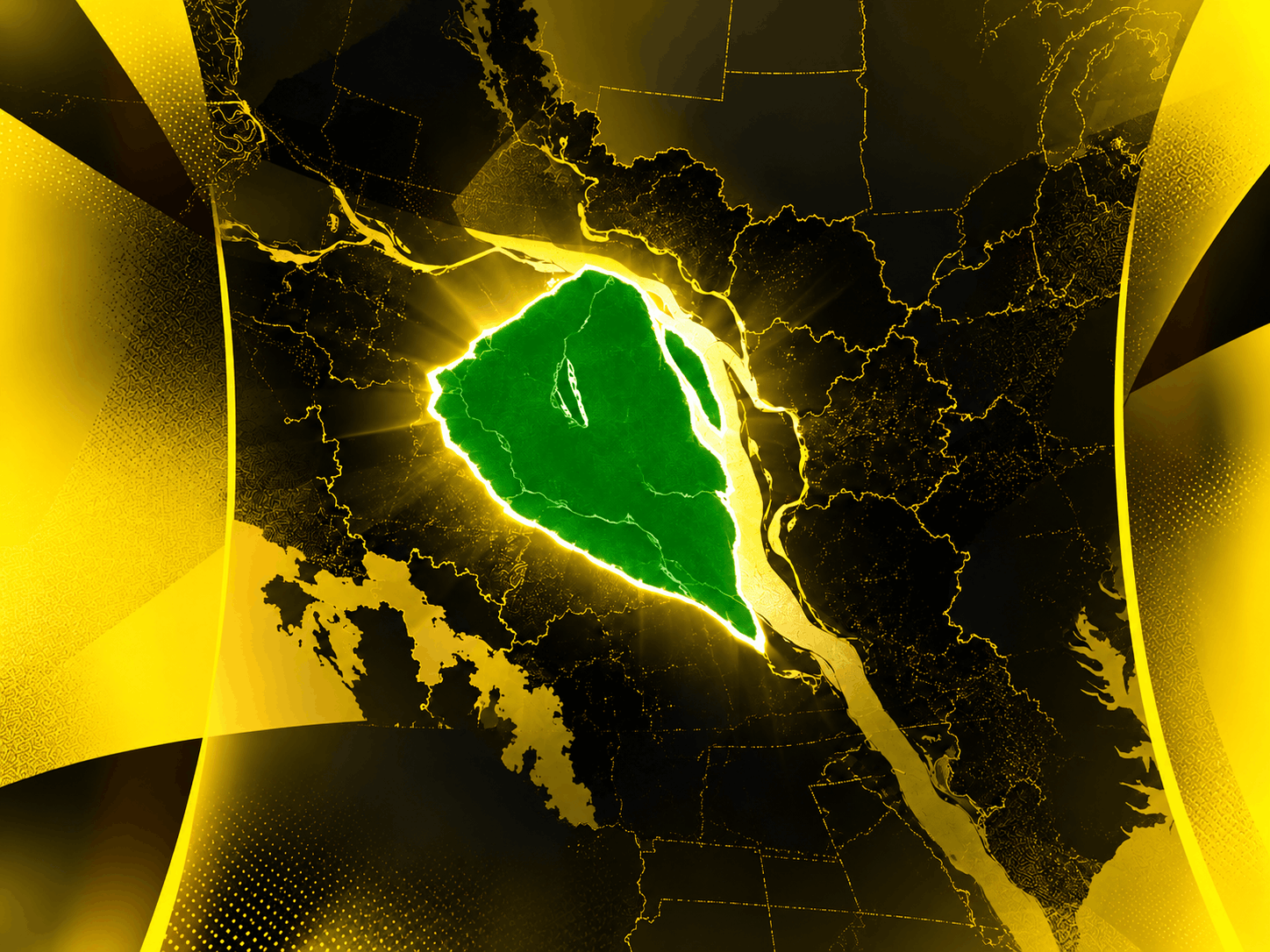
Liberland was founded in 2015 by Vít Jedlička, a Czech libertarian and former financial markets analyst, who declared a roughly 7 km² (or ~2.7 square miles) patch of land between Croatia and Serbia an independent state.
- Liberland says the territory was left unclaimed after the breakup of Yugoslavia and therefore considers it available for a new country.
- Neither Croatia nor Serbia recognizes Liberland as a sovereign state and no internationally recognized country has formally recognized its independence.
- Still, the project has attracted prominent crypto figures.
Justin Sun, the billionaire founder of the TRON blockchain, became involved years after Liberland was created and now serves as its prime minister. Jedlička remains president.
Liberland said Sun retained the prime minister role following another congressional election in March.
The project also says more than 800,000 people have applied for citizenship, though applying doesn't automatically make someone a full citizen with political rights.
And unlike most countries, Liberland doesn't give every politically eligible citizen the same voting weight.
Money can translate into political power
The unusual system is part of Liberland's stated political model as Liberland's own FAQ says citizens' political power is proportional to the amount of tax they pay, while its documentation describes Merits as a governance token that can be converted into political power.
Citizens can acquire Merits through financial contributions, work or other services to Liberland.
Liberland has previously gone even further in marketing the connection between money and citizenship.
A 2025 announcement offered 5,000 Merits and citizenship to people contributing $10,000, while those without the money could earn the same amount through work.
The result is a political system in which two citizens don't necessarily enter an election with equal influence.
Yet, Liberland president Jedlička has openly defended the philosophy.
"We believe that people that contribute more should have more votes," he told The Telegraph, which reported this week that Merits can be acquired by people supporting the project.
Liberland describes the model as meritocracy rather than plutocracy, arguing that people who commit more resources to building the country should have a larger say in running it.
Its own tokenomics documents also say Merit holders have to lock their tokens through a process called "PolitiPooling," limiting their ability to quickly pull that stake back out in a bid to discourage a purely financial takeover of the political system.
Another large wallet raised questions
But Jedlička isn't the only senior figure whose holdings are attracting attention.
Marko Domanović, who started the August forum discussion, pointed to a blockchain identity called "Stone1" holding roughly 1.4 million politically locked Merits, equivalent to about $2.8 million at Liberland's stated $2-per-Merit rate.
- At the minimum 5,000-Merit level, that would represent about 286 times the voting weight of an ordinary newly qualified voter.
Domanović later claimed he had identified Stone1 as Boguslaw Wozniak, Liberland's vice president.
Liberland's official press materials confirm Wozniak holds that office, though The Coinformer couldn't independently establish that the Stone1 blockchain account belongs to him.
Participants in the discussion proposed reducing the disparity by making voting power increase more slowly as Merit holdings grow.
Domanović suggested, for example, that the system could cap one citizen's influence at roughly 10 times another citizen's voting power rather than letting it rise linearly with every additional Merit.
The debate is particularly striking because Liberland has built much of its identity around escaping traditional government and using blockchain technology to create what it sees as a more transparent political system.