



Ethereum Layer-2 networks, blockchains built to make Ethereum transactions faster and cheaper, have paid about 24.15 ETH, or roughly $44,500, to Ethereum's main network since early December, The Coinformer has learned after reviewing data from growthepie, an analytics platform that tracks Ethereum and the networks built around it.
- Layer-2 networks process transactions away from Ethereum's main blockchain, which is also know just as the mainnet.
- They later send compressed bundles of transaction data back to Ethereum so the activity can be stored and checked.
- Ethereum charges them for the space used to send that data and those charges are known as blob fees.
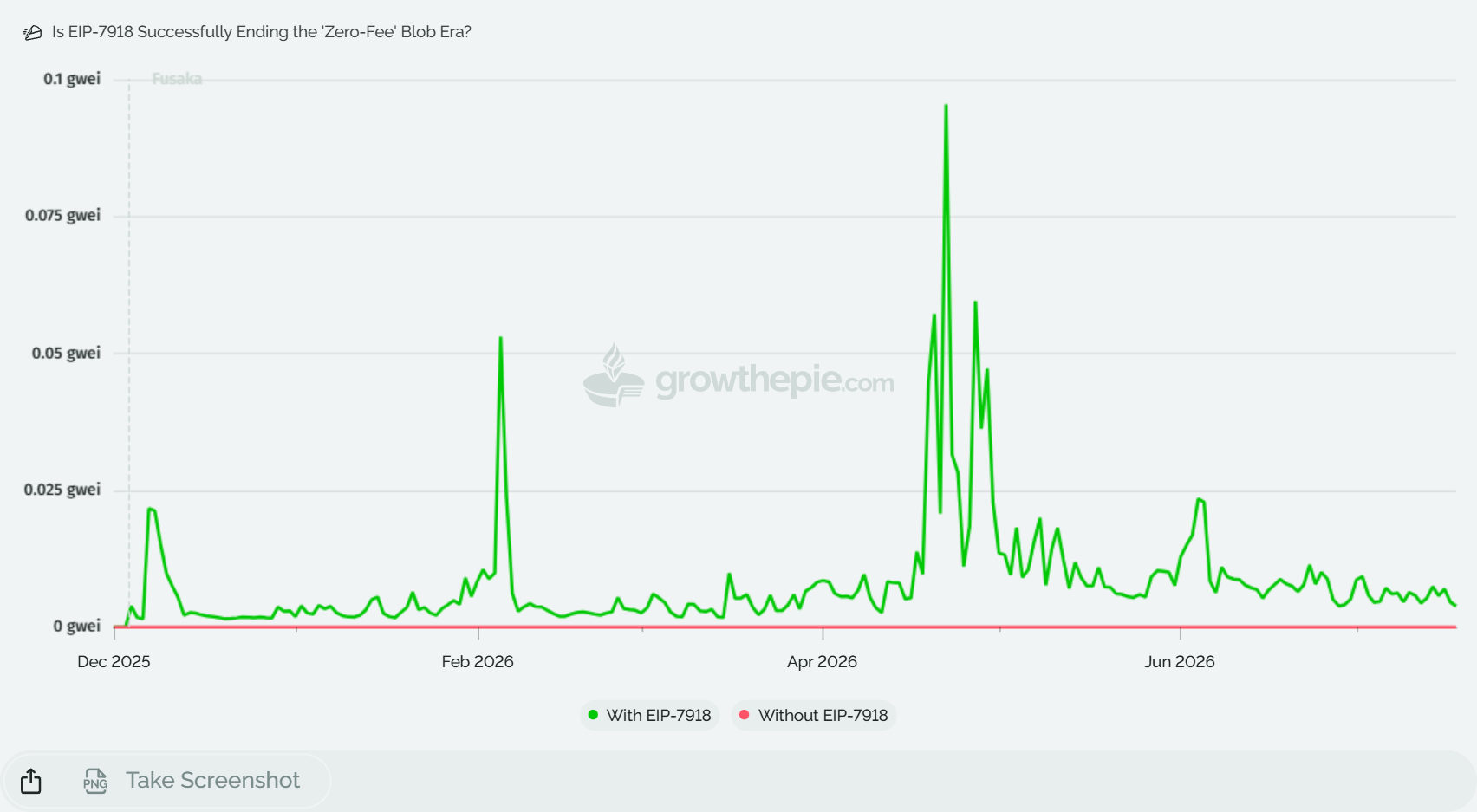
chart comparing Ethereum blob gas prices from December 2025 to July 2026 with EIP-7918 and without it. Source: growthepie.com
Data from growthepie shows that Layer-2 networks have paid about 24.15 ETH in those fees since Fusaka, an Ethereum upgrade designed to give the network more room for Layer-2 data, went live on December 3, 2025.
- The ETH paid through these fees is burned, meaning it is permanently removed from circulation.
One change prevented the fees from falling near zero
Most of the $44,500 came from EIP-7918, a pricing rule included in the Fusaka upgrade.
Before the rule was introduced, Layer-2 networks could sometimes send their data to Ethereum for almost nothing when there was plenty of unused space.
Without the rule, the same Layer-2 activity would have generated only about 0.0000057 ETH, or roughly one cent, according to growthepie's estimate.
Ethereum also made more room for Layer-2 data
Fusaka changed not only how Layer-2 networks pay Ethereum, but also how much data Ethereum can handle from them.
- Two later updates, known as BPO1 and BPO2, increased the number of data bundles that Ethereum aims to fit into each block.
- For context, BPO1 raised the target from six bundles to 10, while BPO2 raised it again to 14.
Fusaka also introduced PeerDAS, a system that lets the computers running Ethereum check smaller pieces of Layer-2 data instead of downloading all of it.
Why Ethereum may not raise the price again
As growthepie argued in an X post, Ethereum could try to collect more by increasing the minimum fee again, but that approach may backfire.
growthepie
If using Ethereum becomes too expensive, Layer-2 developers could send their data through a different part of Ethereum or switch to competing services that offer cheaper data storage.
That means Ethereum may earn more from Layer-2 networks only if overall usage grows, growthepie says.