

Drift, a Solana-based decentralized perpetual futures crypto exchange, is trying to turn its relaunch into a repayment engine for users still carrying losses from a North Korea-linked exploit.
In a June 4 recovery update, the exchange said its "sole focus" now is relaunching a revenue-generating platform that can accelerate user recovery.
Drift
Cindy Leow, Drift's co-founder, wrote in a Thursday post on X that users are "still carrying real losses" and that recovery remains the team's focus, though the blog post didn't provide any factual details on the recovery process.
- Drift also said Noah Prince, previously head of protocol engineering at Helium, a decentralized wireless network that migrated to Solana in 2023, will join as head of protocol.
Drift also added that former members of Gauntlet, a crypto risk management firm known for DeFi risk modeling, have been engaged to help with the relaunch. Their work will include reviewing Drift's liquidation engine, supporting launch configuration, and monitoring risk, the blog post reads.
Read also: Drift recovery vote shows one wallet beating all no voters
The relaunch will also change Drift's market positioning. The platform said it will relaunch as the "largest USDT-based perpetual exchange" on Solana, after a Tether-led support package in April gave the protocol a proposed recovery framework of up to nearly $150 million.
- Under that plan, Tether is proposed to contribute up to $127.5 million, while other partners are proposed to contribute $20 million through a structure that includes a $100 million revenue-linked credit facility, an ecosystem grant and loans to market makers.
Drift claims relaunch revenue will help power a dedicated recovery pool, but its past revenue levels show that alone may not be enough.
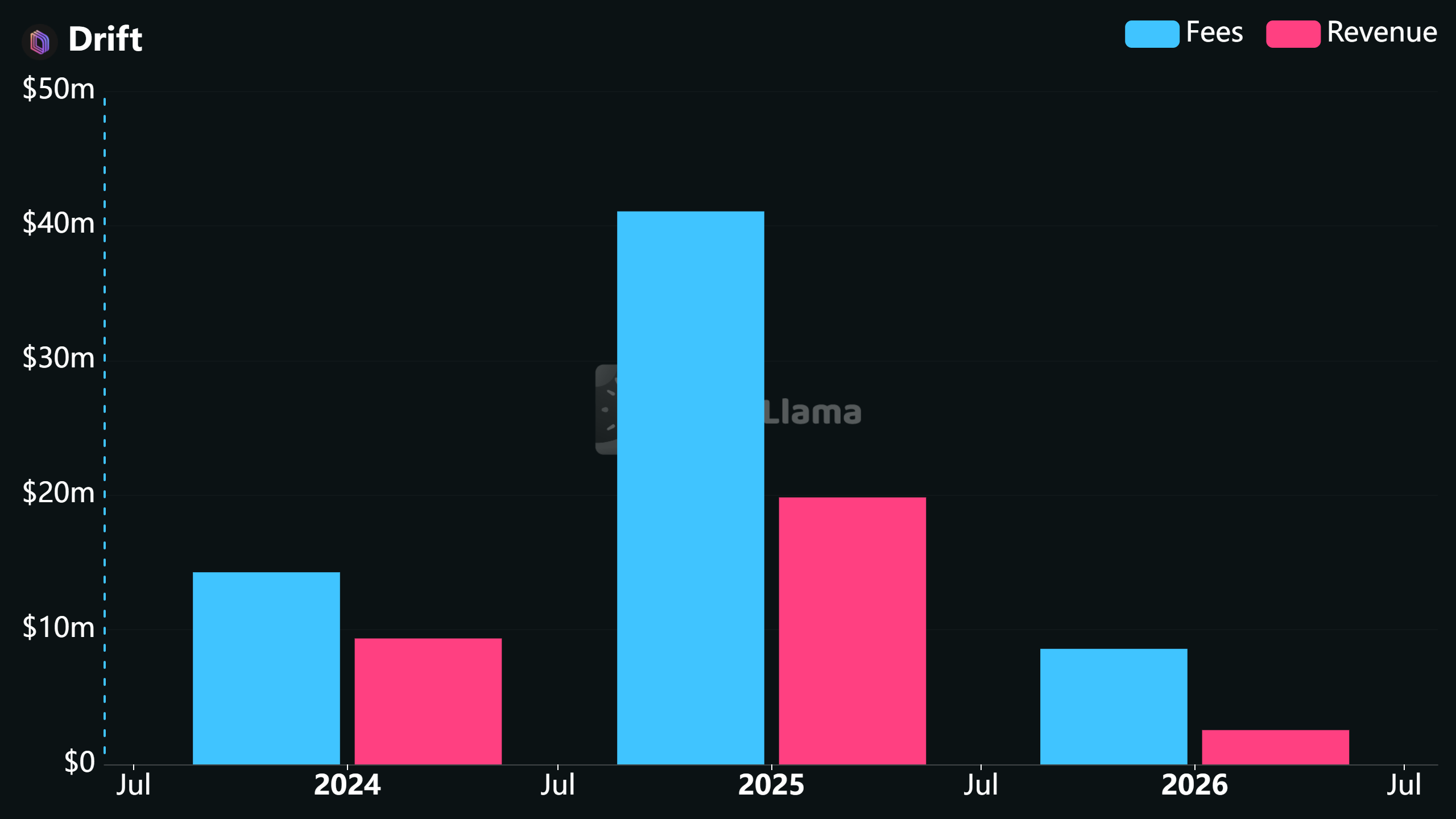
Drift's annual revenue vs fees. Source: DefiLlama
Data from DefiLlama shows Drift generated less than $20 million in annual revenue in its best year (2025) and about $9.35 million in 2024. Against losses estimated at roughly $300 million, a revenue-only recovery would take about 15 years at $20 million a year or more than 31 years at the 2024 level, even before operating costs.
- Drift also said Mandiant, the Google-owned cybersecurity and threat intelligence firm it hired for the forensic review, attributed the attack to UNC6862, the North Korea-linked threat group that Mandiant earlier also blamed for the attack on Radiant Capital, a cross-chain DeFi lending protocol hit by a $50 million exploit in October 2024.
- As Drift argued, Mandiant's review found "the group's general tactics, techniques, and procedures align with historical North Korean operations and operational telemetry."