



The dollar value of outstanding loans on DeFi applications fell by nearly $7.8 billion (or 27.6%) during Q2 to $20.4 billion, according to a Galaxy Research report published on Monday, Aug. 17.
- Centralized finance lenders, known as CeFi lenders, also contracted, but by a smaller 9.6% to about $23 billion.
- That put them ahead of DeFi lending apps for the first time since Q3 of 2023.
DeFi therefore lost the lead through faster contraction rather than growth among centralized lenders. Its share of the two markets fell from 52.6% to approximately 47% in three months.
The reversal came nine months after DeFi borrowing reached a record $41 billion and captured about 62.7% of outstanding loans across DeFi apps and CeFi lenders.
- Since then, the value of DeFi loans has fallen by roughly half, while centralized loans have declined only about 6%, based on The Coinformer's comparison with Galaxy Research's Q3 report.
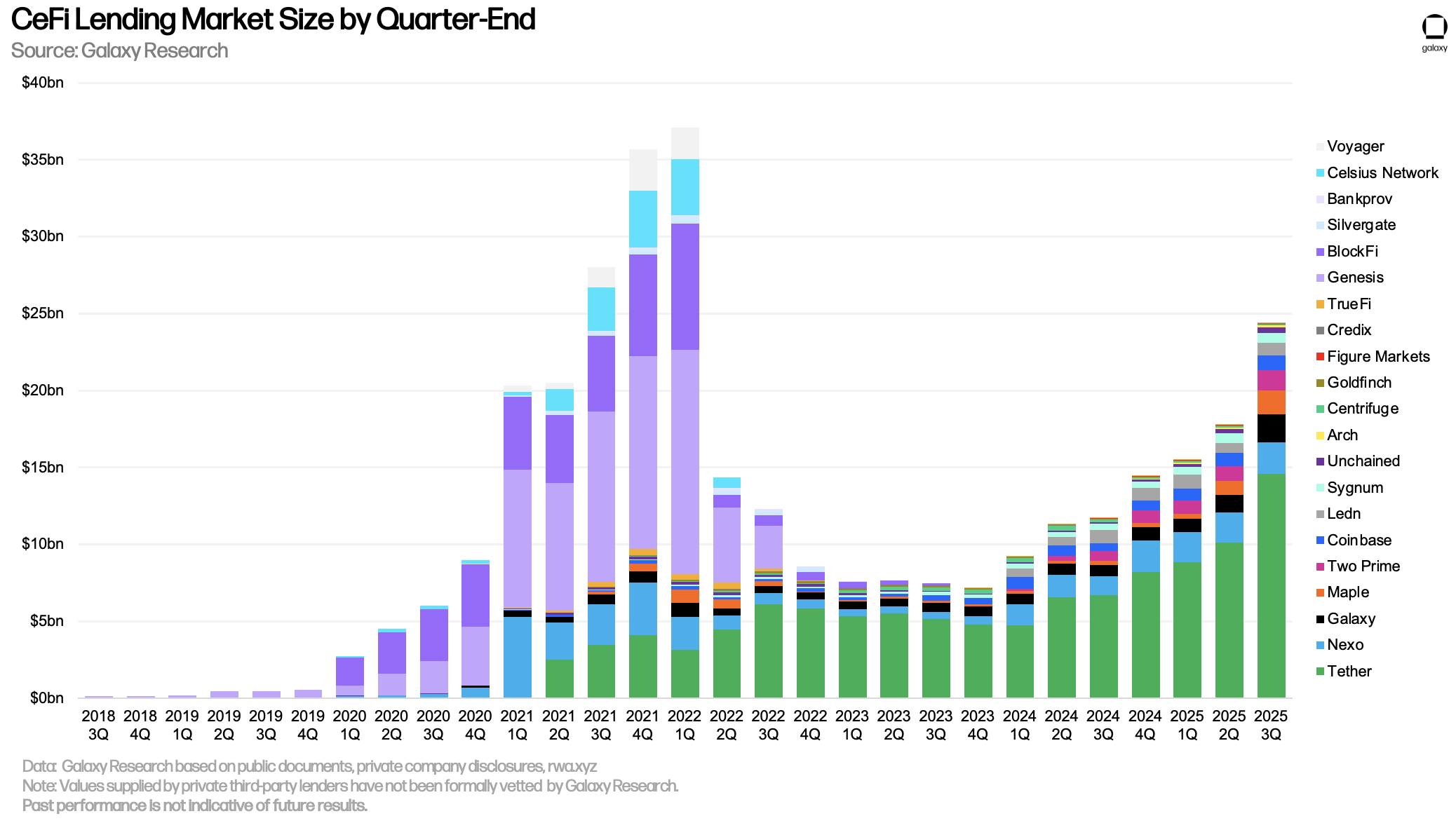
CeFi lending market size by quarter-end. Source: Galaxy Research
Galaxy Research described the broader contraction as an orderly deleveraging, with lending markets "taking the stairs down, not the elevator." Total crypto collateralized lending, including crypto-backed stablecoins created through collateralized debt positions, fell 16.7% to $56.1 billion.
The crossover doesn't mean, though, that centralized lenders now dominate every form of crypto lending. Once those collateralized stablecoins are included, onchain venues still account for about 59% of the market.
- Galaxy Research also warned that some CeFi and DeFi loans may be double-counted.
- Tether accounted for 58.5% of its CeFi estimate, while figures supplied by private lenders weren't formally vetted by the firm.