


New data revealed by blockchain forensic firm Chainalysis shows cartel laundering, Chinese-language money laundering networks and Russia-linked sanctions flows are actively moving through select Brazilian crypto exchanges.
The New York-headquartered firm said in a June 18 report that Brazil received around $318 billion in on-chain value from July 2024 through June 2025, roughly one-third of all crypto value received across Latin America.
- Chainalysis says Chinese-language money laundering networks, Russian sanctions evaders and drug traffickers together made up more than 50% of identified illicit inflows to select Brazilian exchanges in 2025.
- Cartel-related laundering became the largest identified category of illicit inflows, with Chainalysis linking the pattern to Brazil's role along South American cocaine trafficking routes and citing organized crime groups, including Primeiro Comando da Capital and Comando Vermelho, Brazil's two largest and most powerful criminal organizations.
Read also: HTX sanctions made risk score 'meaningless,' ZachXBT says, advises users to obfuscate crypto
Few addresses carry most flows
Chainalysis also said flows linked to Chinese-language money laundering networks appeared consistently from 2023 to 2025. As for Russia-related services, they became more visible in 2024 and 2025 as sanctioned entities looked for crypto routes outside traditional finance.
Chainalysis
- The flows were spread across many entry points, as Chainalysis said Brazilian crypto exchanges had about 550 to 950 distinct crypto deposit addresses exposed to illicit inflows per quarter from 2023 to early 2026.
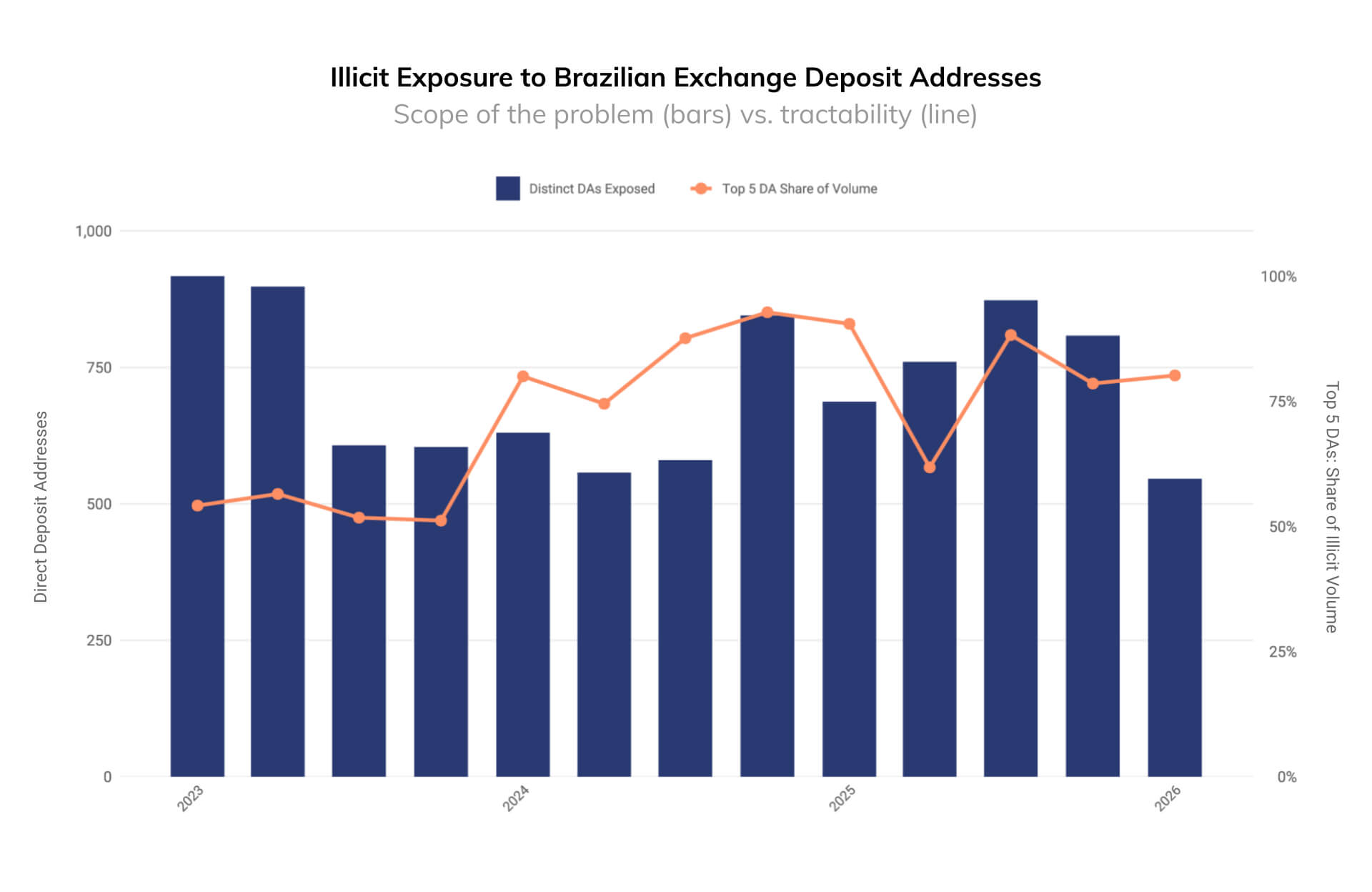
Chart showing illicit exposure to Brazilian exchange deposit addresses. Source Chainalysis
Yet, the most eye-catching finding was how concentrated the flows were, with the top five most-exposed deposit addresses per quarter receiving 75% to 90% of illicit volume and five addresses taking about 80% as of March 2026, the post reads.
The most eye-catching finding was how concentrated illicit flows were at deposit addresses tied to select Brazilian exchanges, though Chainalysis didn't identify those addresses as personal wallets or name the exchanges.
More on Brazil: Brazilian banking giant Bradesco tests stablecoins for foreign trade