



Coinbase's Layer-2 blockchain Base activated its native token standard B20 on July 8 as its alternative to the common ERC-20 standard.
Base designed B20 for stablecoins, tokenized real-world assets, equities and "long-tail" tokens, per its official documentation.
One week later, B20 has made issuing assets extremely easy. But sustaining attention may be harder.
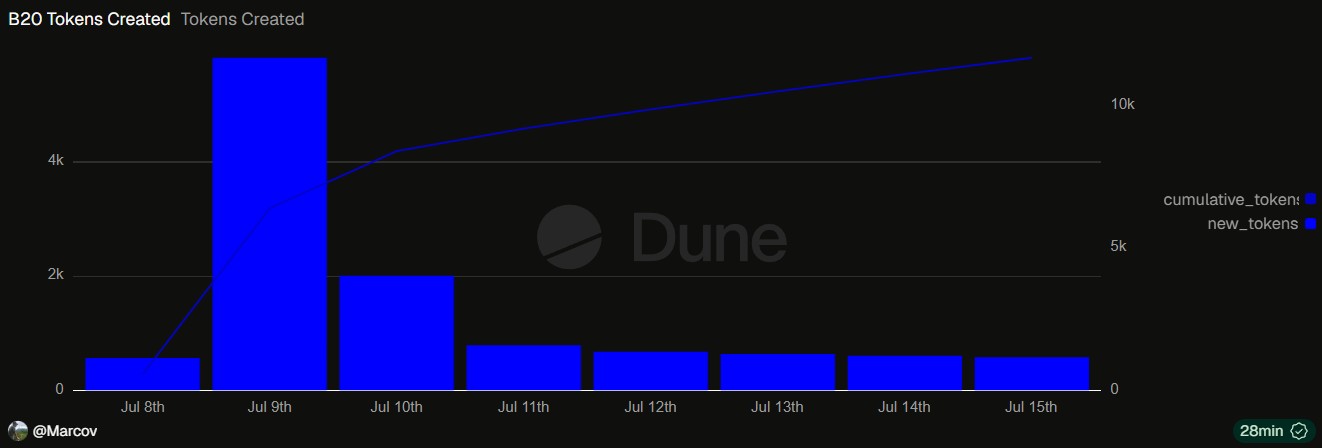
Chart showing daily amount of B20 tokens created on Base vs cumulative token amount. Source: Dune Analytics
- By press time, July 15, over 11,490 B20 tokens had been created on Base, generating over $24 million in DEX volume and reaching 17,396 unique holder addresses, The Coinformer has learned after reviewing a Dune Analytics dashboard built by Marcov, a contributor to the blockchain-data platform.
But daily launches then quickly fell to about 2,000 on July 10 and continued sliding to roughly 400 by July 15, about 93% below the peak.
- New holder addresses followed a similar curve, falling from approximately 8,300 on July 9 to about 270 on July 12, a drop of almost 97%.
- Daily trades declined from roughly 129,000 to around 3,500 over the same period, the data shows.
Trading returned, but narrowly
DEX volume fell from an estimated $7.7 million on July 9 to less than $100,000 on July 12, down about 99%.
It later recovered, though, to around $3.3 million on July 14 and $6.1 million by the July 15 snapshot, while trades rebounded to nearly 39,000.
Coinbase Man, a memecoin trading under the ticker BRIAN, generated $7 million, or about 29% of all B20 volume, after launching late on July 14.
The five busiest tokens accounted for $18 million, or nearly 75% of the total, while the top three captured about 58%, the data shows.
So far, Base has achieved rapid issuance of B20 tokens and occasional bursts of trading, but broad, durable demand remains less clear one week after launch.